What is NPF?
Nyce Protein Fasting (NPF) is our improved form of intermittent fasting. The basic principle stays the same: you eat your meals within a limited eating window of 6-8 hours. The decisive difference: instead of fasting completely for the rest of the time, you take 2 targeted protein servings - for example as a shake in the morning and mid-morning.
The result: just like with intermittent fasting, you reach a calorie deficit almost automatically without tracking every calorie - while continuously supplying your body with protein. And protein contributes to the maintenance and growth of muscle mass.[6] That is exactly where classic intermittent fasting most often fails.
The problem with classic intermittent fasting
Intermittent fasting (e.g. 16:8 or 20:4) works because a shorter eating window usually leads to fewer calories automatically. The catch: within a short window, very few people manage to reach their daily protein target. In studies with insufficient protein intake, participants lost muscle despite training - and all-day fasting formats such as alternate-day fasting are even riskier for muscle preservation.[6] Well-known fasting advocates such as Dr. Peter Attia have therefore moved away from classic intermittent fasting and now emphasise protein intake.[9]
| Classic intermittent fasting | Nyce Protein Fasting | |
|---|---|---|
| Eating window | 6-8 hours, complete fasting for the rest | 6-8 hours, placed flexibly in your day |
| Outside the window | Only water, tea or coffee | 2 protein servings (e.g. shakes) as fixed anchors |
| Daily protein target | Often missed by far in the short window | Spread over 4 servings - the daily target is reached reliably |
| Muscle preservation | Risky when protein falls short | Protein contributes to the maintenance of muscle mass |
| Tracking effort | Low - but blind to the protein gap | Low - calculate once, then just count servings |
The solution: NPF - the 4 pillars
1. Choose your eating window
You eat your meals within a window of 6-8 hours, e.g. 12:00-19:00. When exactly is up to you - the window should fit into your daily life, not the other way round.
2. Protein instead of nothing
You bridge the food-free time with 2 protein servings, e.g. one shake in the morning and one mid-morning. That keeps hunger small and your muscles supplied.
3. Save on sugar
Within the window: plenty of protein and vegetables, little added sugar. Sweet treats don't have to go - low-sugar alternatives like a creamy shake satisfy sweet cravings.
4. Build in movement
Around 10,000 steps daily plus 2-3 strength training sessions per week are the strongest lever to build fitness and maintain muscle while dieting.
How much protein - and how to spread it?
1.6-2.2 g
per kg / day
Evidence-based target range for muscle preservation in a calorie deficit
4 servings
per day
2 meals in the eating window + 2 protein shakes outside of it
25-40 g
per serving
Sensible amount per meal or shake for muscle protein synthesis
In a calorie deficit, roughly 1.6-2.2 g of protein per kilogram of body weight per day is considered a sensible target range - the more intensively you train, the higher you may aim.[4, 6, 9] Instead of a blanket “2 g for everyone” we recommend: find your value within this range and spread it over 4 servings of 25-40 g each - that supports muscle protein synthesis better than a single large meal.[6]
Worked example
You weigh 70 kg and train regularly? Then 70 × 1.8 ≈ 130 g of protein per day is a good target. Divided by 4, that gives 4 servings of approx. 33 g of protein - 2 as meals, 2 as shakes. A nyce. shake provides 19-22 g of protein per serving; with milk or an extra scoop of powder you are in the target range.
A sample NPF day
This is what NPF looks like in practice - with an eating window from 2 pm to 8 pm. Of course you can also place the window differently, e.g. 10 am to 4 pm:
7:00 amProtein shake
Protein serving 1
A nyce. Vanilla Milkshake - creamy, low in sugar and mixed in seconds. About a quarter of your daily protein target without blowing your calorie budget.
10:00 amProtein shake
Protein serving 2
A nyce. Protein Iced Coffee: caffeine kick and protein in one. Perfect for staying full and focused until your first meal.
2:00 pm
First meal - eating window opens
For example a salad or a bowl with a solid protein source: chicken, fish, tofu or legumes. Goal: hit your calculated protein serving.
6:00 pm
Dinner
Oven-roasted vegetables, pasta or rice - always combined with a protein source. This can be the biggest meal of the day.
7:30 pm
Dessert - eating window closes
A quark bowl or a protein-rich pudding as a sweet finish. Then the food-free time begins until the shake the next morning.
nyce. tip: make sure you drink enough during the food-free time - water, unsweetened tea and black coffee are fine anytime.
What can you eat in the eating window?
The short answer: anything - but with a system. NPF does not work with bans, but with two simple rules: every meal contains a solid protein source, and the daily deficit is maintained. A proven approach is 2 larger meals plus a snack or dessert - just like in the sample day above. The plate formula serves as a guide for every meal:
1/2 plate: vegetables & salad
Lots of volume, few calories, plenty of fibre - keeps you full and your blood sugar stable. Raw, steamed or oven-roasted.
1/4 plate: protein source
The centrepiece of every NPF meal. This is where your calculated protein serving of 25-40 g goes - see the examples below.
1/4 plate: filling side
Potatoes, rice, pasta, bread or legumes. Carbohydrates are explicitly allowed with NPF - the amount depends on your calorie needs.
Good protein sources for your meals
To reach your serving of 25-40 g of protein per meal, here are typical protein contents per 100 g:
| Protein source | Protein / 100 g | Good to know |
|---|---|---|
| Chicken / turkey breast | approx. 23 g | lean & versatile |
| Low-fat quark / skyr | approx. 11-12 g | ideal for dessert |
| Salmon / white fish | approx. 18-22 g | also provides omega-3 |
| Eggs | approx. 13 g | approx. 7 g per egg |
| Tofu / tempeh | approx. 15-19 g | plant-based staple |
| Lentils / chickpeas (cooked) | approx. 8-9 g | plus fibre |
| Cottage cheese | approx. 12 g | as a topping or snack |
Plenty of
- Lean meat, fish, eggs, tofu and legumes as your protein base
- Vegetables and salad with every meal - ideally half the plate
- Filling sides such as potatoes, rice, pasta or wholegrain bread in adjusted amounts
- Low-fat quark, skyr or yoghurt as a protein-rich dessert
- Fruit as a snack or sweetness in dessert
- Healthy fats in moderation: olive oil, nuts, avocado
Dose consciously
- Added sugar: soft drinks, juices, sweets - the biggest hidden calorie sources
- Fried foods and heavily processed snacks - many calories, little satiety
- Liquid calories in general: fancy milk coffees and smoothies add up too
- Alcohol - slows fat burning and provides 7 kcal per gram
- Large amounts of cream, butter and rich sauces - better dosed consciously
Important: none of this is forbidden. Pizza, burgers or a piece of cake fit into an NPF concept - just not every day, and ideally complemented by a protein source. If you regularly satisfy your sweet cravings with a protein-rich alternative such as a quark bowl or a creamy shake, you automatically save sugar and calories without feeling restricted.[11]
Where does the idea come from?
Honestly: the basic principle behind NPF is not new – and that is the good news. The combination of a calorie deficit and a high protein intake spread across the day to maintain muscle has been studied in nutritional medicine since the 1970s. Back then, George Blackburn and Bruce Bistrian at Harvard/MIT developed the protein-sparing modified fast (PSMF): a protein-focused, calorie-reduced phase designed specifically to preserve lean mass.[7, 12, 13] Modern randomised trials on “protein pacing” – intermittent fasting plus distributed protein servings – confirm the approach.[8]
That is exactly why several brands build on this idea today – known for instance as More Protein Fasting (MPF, formerly “Wolf Protein Fasting”). No one invented or owns this nutritional principle; it rests on freely available research. nyce. Protein Fasting is our own take on it – and we set ourselves apart where it matters: we do not promise “real” fasting but openly call NPF smart deficit management (see below). Instead of a blanket “2 g for everyone” rule we recommend an individual target range of 1.6–2.2 g per kilogram. And we rely directly on the primary literature, not on other brands’ marketing pages.
What does the science say?
The core idea of NPF - intermittent fasting plus targeted protein servings - was examined directly in a randomised study: Arciero and colleagues compared a classic calorie deficit with “protein pacing”, i.e. intermittent fasting combined with 4 protein servings spread across the day. The protein fasting group lost more weight and more visceral belly fat - while maintaining a high protein intake.[8]
This fits the rest of the evidence: time-restricted eating does not attack muscle mass any more than other diets - as long as the daily protein amount is reached.[6] And the concept is related to the medically established protein-sparing modified fast (PSMF): a very low-calorie but deliberately protein-rich phase designed specifically to spare muscle.[7, 12, 13]
Important for context: no single concept works magic. NPF works because it combines two well-documented levers - a calorie deficit without tracking effort and a sufficiently high, well-distributed protein intake. Together with strength training, that is the scientifically best lever to maintain your muscles while dieting.[4, 5, 6]
NPF & GLP-1 medication
GLP-1 medications (e.g. semaglutide or tirzepatide) strongly suppress appetite and lead to significant weight loss. In clinical studies, depending on the trial, around 25 to 40% of the weight lost was lean mass - including muscle.[1, 2, 3] A meta-analysis of randomised trials confirms that absolute muscle mass decreases, even if the share of muscle in total weight can improve in relative terms.[2]
The actual problem: because appetite is suppressed, many people unintentionally eat too little - and thus take in too little protein. Experts therefore explicitly recommend accompanying the medication with a protein-rich diet and strength training to maintain muscle.[2, 4] This is exactly where NPF plays to its strengths: the 2 fixed protein anchors per day ensure that protein intake does not collapse along with appetite - a shake delivers a lot of protein in compact form when there is no appetite for a full meal.
How to start with NPF
- 1Calculate your requirement: body weight in kg × 1.6-2.2 = grams of protein per day. The more you train, the higher you can aim.
- 2Divide the daily amount by 4: you eat 2 servings within the eating window and take 2 as protein shakes outside of it.
- 3Choose your eating window of 6-8 hours so that it fits your daily life - e.g. 12:00-19:00 or 14:00-20:00.
- 4Schedule your 2 shakes firmly, e.g. in the morning and mid-morning. That way no protein gap arises and hunger stays manageable.
- 5Combine NPF with strength training 2-3× per week - that is the strongest lever against muscle loss.
- 6Drink enough: water, unsweetened tea and coffee are allowed anytime during the food-free period.
Your 2 protein anchors, mixed in seconds
19-22 g of protein per serving, low in sugar and creamy: Vanilla Milkshake for the morning, Protein Iced Coffee for mid-morning - your NPF servings outside the eating window.
View shakes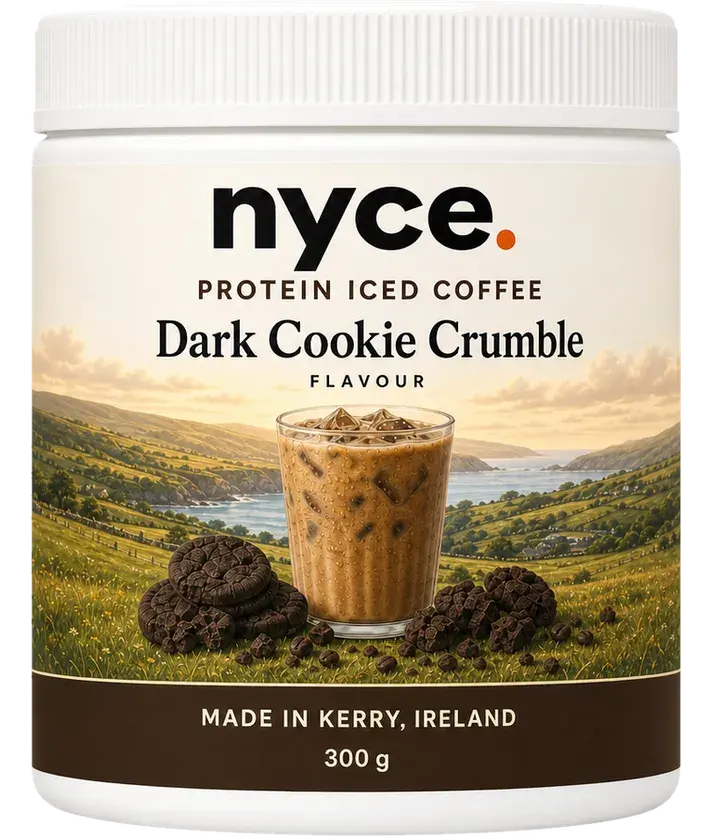

FAQ: frequently asked questions about Nyce Protein Fasting
What is Nyce Protein Fasting (NPF)?
NPF is our improved form of intermittent fasting: you eat your meals within a window of 6-8 hours and bridge the food-free time with 2 protein servings, e.g. shakes. That way you reach a calorie deficit more easily while still supplying your muscles with protein around the clock.
What is the difference to classic intermittent fasting?
With classic intermittent fasting (e.g. 16:8), only calorie-free drinks are allowed outside the eating window. As a result, many people miss their daily protein target - and risk muscle loss. With NPF you fill exactly this gap with 2 targeted protein servings.
Doesn't the shake break my fast?
It does - and we say so honestly: protein stimulates insulin and metabolism and physiologically breaks the fast. NPF is therefore deliberately not “real” fasting but smart deficit management. The goal is not maximum fasting time but a calorie deficit with optimal protein supply - and the evidence for that is much stronger.
What do I eat in the eating window?
2 larger meals and optionally a snack or dessert. With every meal, pay attention to your calculated protein serving, plenty of vegetables and little added sugar. Carbohydrates such as pasta, rice or potatoes are no problem as long as the overall deficit is maintained. A detailed overview with the plate formula and protein sources can be found in the section “What can you eat in the eating window?” above.
Who is NPF not suitable for?
For pregnant and breastfeeding women, people with eating disorders (including a history of them), children and adolescents, and in cases of kidney disease or other relevant pre-existing conditions. When in doubt: always check with your doctor first.
Does NPF also work with GLP-1 medication?
That is exactly when the principle makes sense: GLP-1 medications suppress appetite so strongly that many people unintentionally eat too little protein and lose a disproportionate amount of muscle. Fixed protein anchors such as 2 shakes a day help you reach your daily target anyway. However, always coordinate your nutrition during therapy with your doctor.
Sources
A selection of peer-reviewed studies and expert reviews on the state of research. The content summarises the state of research in general terms and does not replace individual advice.
- [1]Wilding JPH et al. Once-Weekly Semaglutide in Adults with Overweight or Obesity (STEP 1). N Engl J Med 2021.
- [2]Effect of GLP-1 receptor agonists at doses for obesity management on muscle health: systematic review and meta-analysis of RCTs. International Journal of Obesity 2026.
- [3]Preservation of lean soft tissue during weight loss induced by GLP-1 and GLP-1/GIP receptor agonists: A case series. 2025.
- [4]Muscle loss and GLP-1R agonists use – Review zu Ernährungs- und Trainingsstrategien. PMC 2025.
- [5]Muscle Mass and Glucagon-Like Peptide-1 Receptor Agonists: Adaptive or Maladaptive Response to Weight Loss? Circulation 2024.
- [6]Does Timing Matter? A Narrative Review of Intermittent Fasting Variants and Their Effects on Bodyweight and Body Composition. Nutrients 2022.
- [7]The Protein-Sparing Modified Fast (PSMF) – Übersicht zu Prinzip und Evidenz. Cleveland Clinic / Healthline.
- [8]Arciero PJ et al. Intermittent fasting and protein pacing are superior to caloric restriction for weight and visceral fat loss. Obesity 2023 (PMID 36575144).
- [9]Dr. Peter Attia – Beiträge und Podcasts zu Proteinbedarf und Muskelerhalt (peterattiamd.com).
- [10]AOK Gesundheitsmagazin: 10.000 Schritte am Tag – wie gesund ist das tägliche Gehen?
- [11]Zentrum der Gesundheit: Zucker – eine Übersicht über gesundheitliche Auswirkungen.
- [12]Bistrian BR. Clinical Use of a Protein-Sparing Modified Fast. JAMA 1978 (PMID 702762).Medical origin of the concept (1970s) - proof that the idea is decades old.
- [13]Palgi A et al. Multidisciplinary treatment of obesity with a protein-sparing modified fast: results in 668 outpatients. Am J Public Health 1985.Clinical evidence for weight loss with preserved lean mass.